Vapor chambers
Heat from the core travels through phase change to the base of the radiators. No pumps: capillary action sustains the cycle.
18kW transferred
Hardware
There are no technicians in orbit. Every design decision answers a single question: what happens if this fails and no one can touch it for fourteen years?
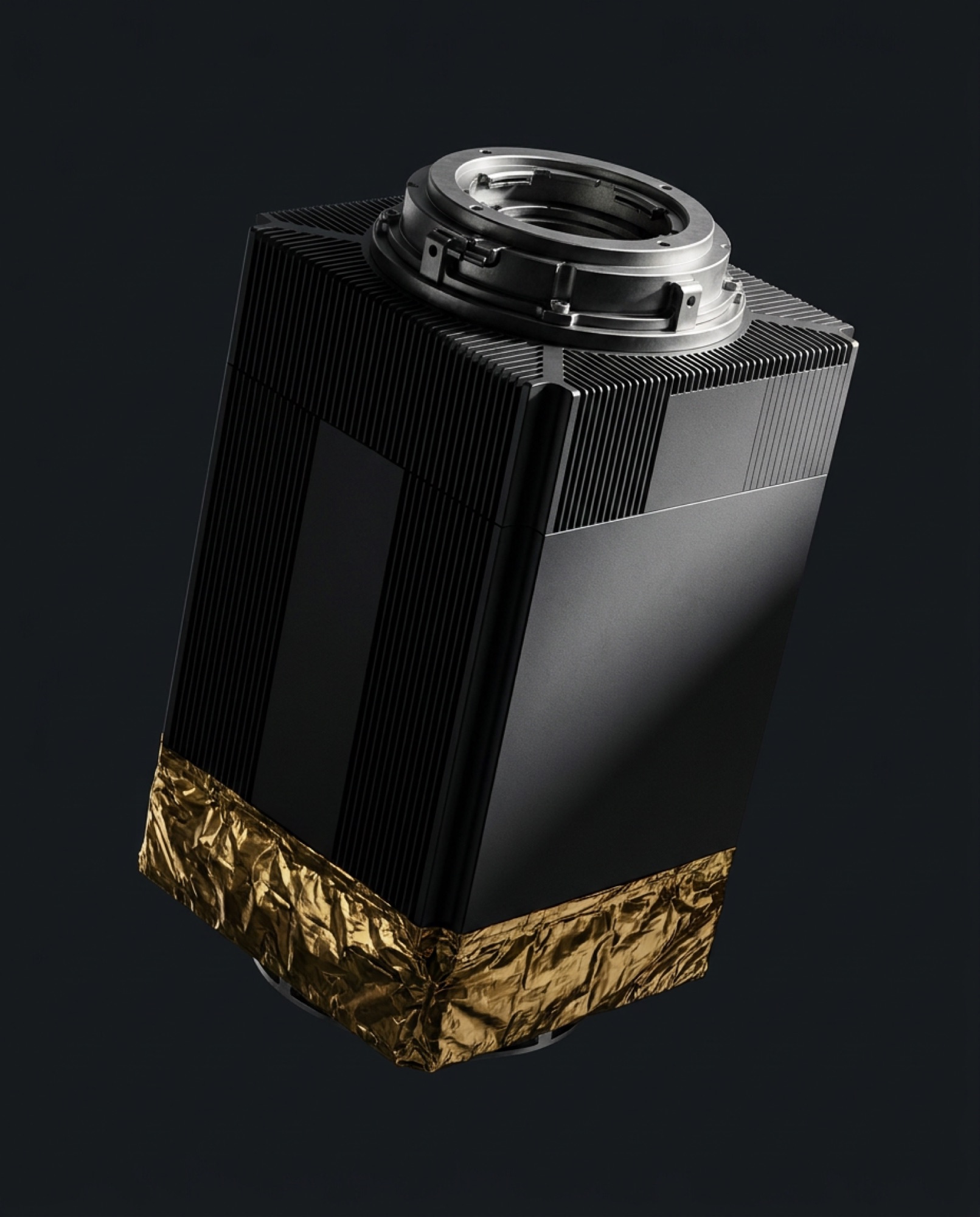
ORB-N4
The aluminum 7075 chassis is machined from a single piece and serves as structure, shielding, and heat sink. The electronics are triplicated with majority voting: a radiation strike that corrupts one core is discarded before it can propagate.
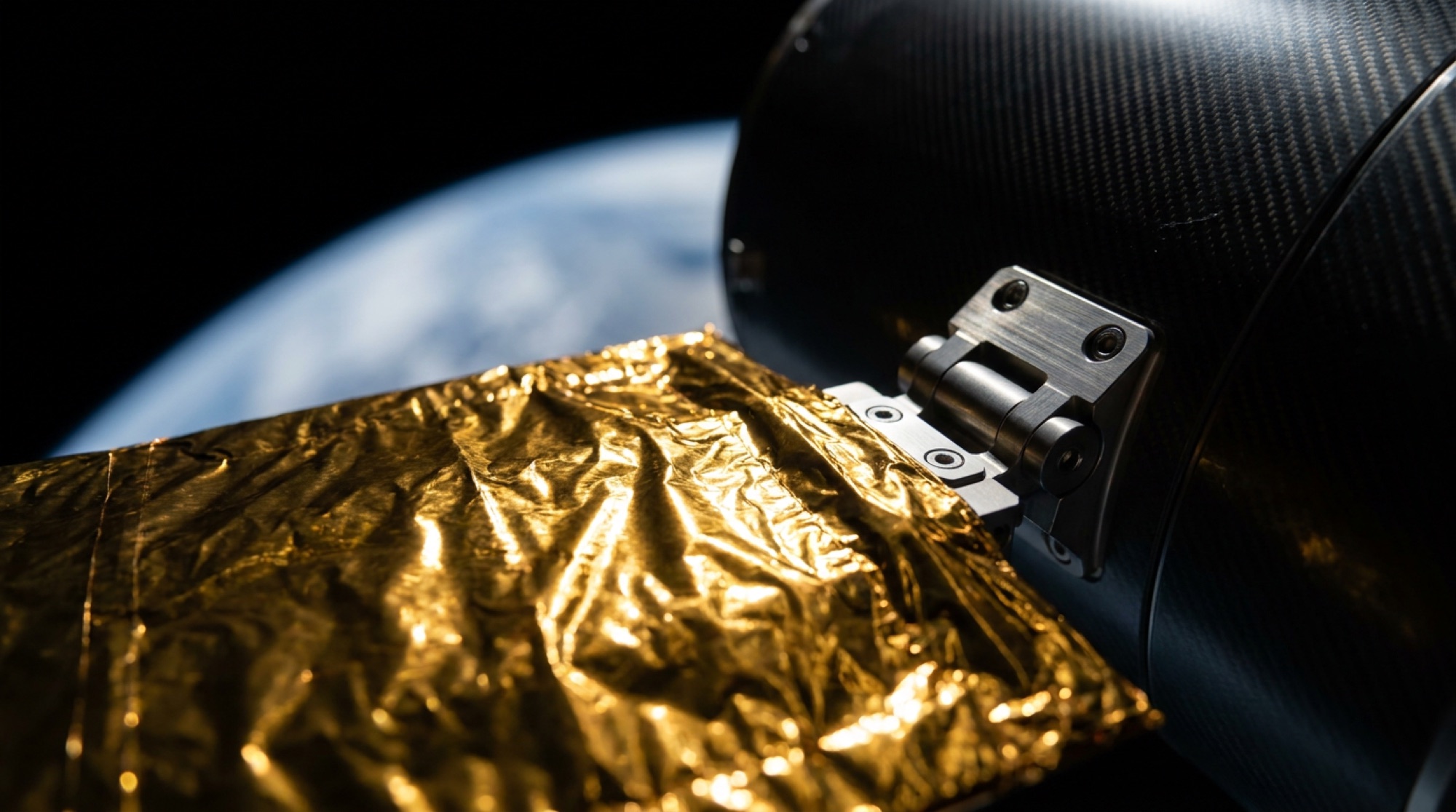
Thermal control
There is no convection in a vacuum. The only way heat can escape is through infrared radiation — which means redesigning the problem from first principles.
Heat from the core travels through phase change to the base of the radiators. No pumps: capillary action sustains the cycle.
Two 22 m² wings with high-emissivity coatings unfold after separation from the launch vehicle and never move again.
The scheduler knows the ephemerides: heavy workloads run during illuminated phases and migrate to another node before each eclipse.
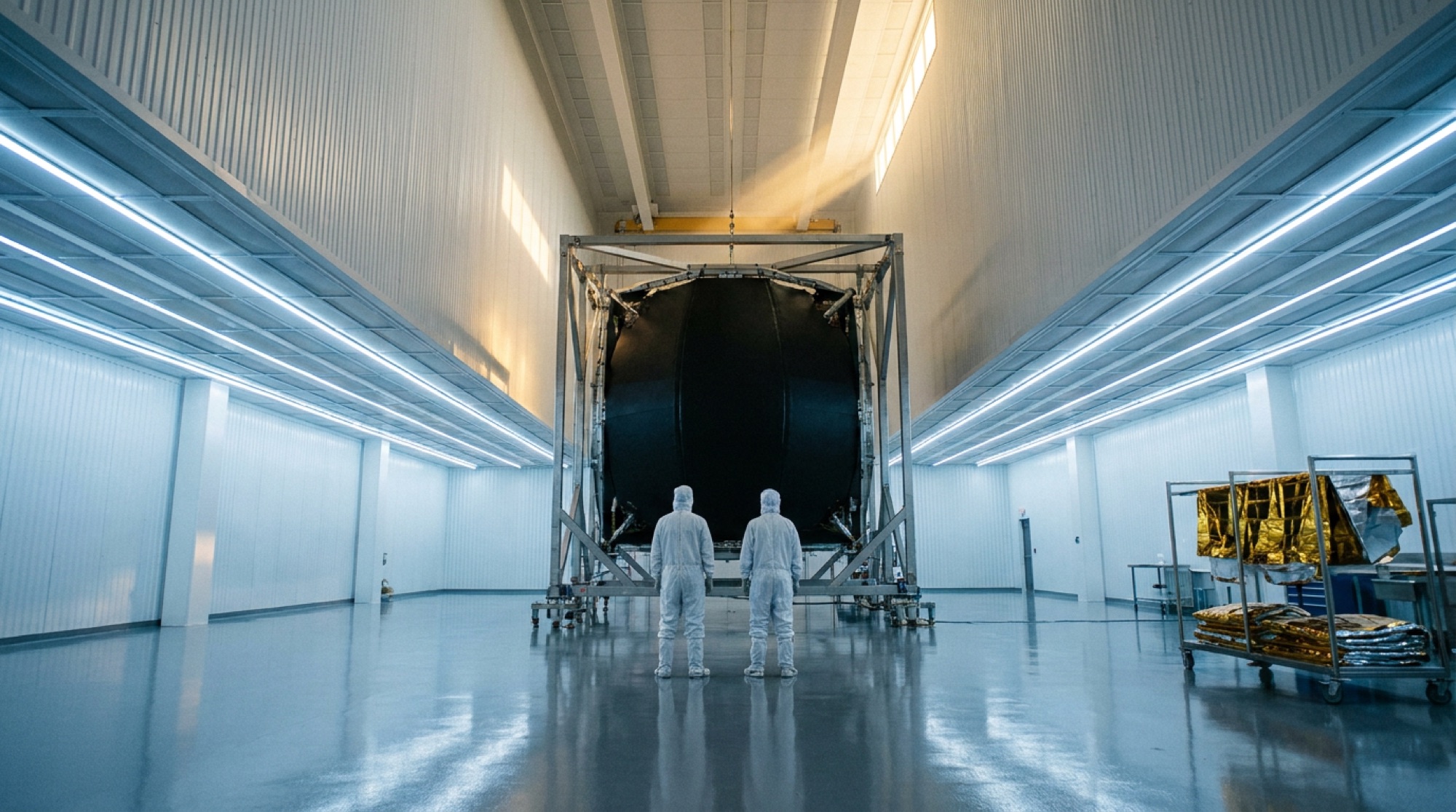
Integration
Each module undergoes thermal-vacuum cycling, random vibration, and pyrotechnic shock before receiving flight clearance. No node leaves the building without surviving a simulated launch.
Continue